

Mapperton House Wedding Photographer, Dorset
Mapperton House and Gardens sits tucked into a fold of West Dorset countryside near Beaminster, invisible from the road until the valley opens and the manor appears below. Built from warm Ham Hill stone beginning in the 1540s, it remains one of the most complete and visually distinctive country house settings in the county.
As a Dorset wedding photographer who has photographed weddings at Mapperton across different seasons, I’ve come to appreciate how unusually well the venue supports both documentary wedding photography and more considered portrait work. The descending gardens, natural seclusion and consistent stone palette create a setting where light, movement and atmosphere work in your favour rather than against you.
The estate has remained in the hands of just four families across eight centuries and still belongs to the Earl and Countess of Sandwich. That continuity is visible. Nothing feels curated purely for weddings. The gardens have matured fully, the Coach House retains its original beams, and the stone carries genuine age. For couples drawn to creative wedding photography that feels natural rather than styled, that authenticity makes a real difference.
Venue overview
Mapperton offers exclusive use of the gardens, grounds and Coach House on the wedding day. Ceremony options include the Garden Pavilion, Orangery, Grottoes, Coach House and neighbouring All Saints Church, allowing the entire day to unfold within a compact and coherent setting.
The Coach House accommodates up to 120 seated guests, with marquee options on the lawn for larger celebrations. Accommodation is included across the Garden Cottage and Keepers Cottage, sleeping up to twelve guests in total, which keeps preparations relaxed and removes any need for travel between locations.
The gardens descend across three distinct levels. From the croquet lawn beside the house, through the fountain courtyard with its topiary and statuary, and down into the arboretum and valley beyond. That layered structure gives the day natural movement and creates genuine visual variety without needing to manufacture it.
Why Mapperton works so well for wedding photography
Mapperton is one of those venues where the setting and a documentary approach reinforce each other.
Because the gardens unfold across levels rather than around a single terrace, guests naturally disperse. Conversations happen in pockets rather than clusters. From experience, this produces a steady flow of candid moments without needing to stage or interrupt anything. For couples planning a Dorset wedding who value documentary wedding photography, this layout genuinely supports the approach. From experience, the flow from ceremony through to reception is one of Mapperton’s real strengths.
The range of environments within a short walk is unusual. The Ham Hill stone of the manor and pavilion holds warmth in almost any condition. The fountain courtyard offers architectural framing without artificial structure. The Grottoes introduce shade and texture. The valley below opens into long views across Dorset countryside. A full gallery from Mapperton carries visual variation organically rather than feeling engineered.
Despite its scale, the venue feels contained. The valley setting prevents guests from drifting too far, and movement between levels is intuitive rather than directional. That containment is subtle but important. It keeps energy focused and allows moments to build naturally.
The stone palette is particularly forgiving. Ham Hill stone has a honeyed quality that complements skin tones and remains consistent in overcast conditions. Across multiple weddings here, images from Mapperton tend to feel timeless rather than dependent on weather or season.
If you’re planning a Mapperton wedding and want coverage that reflects the day as it unfolds naturally, you can view more of my work across Dorset or get in touch to check availability.
How a Wedding Day Typically Flows at Mapperton
Morning Preparations
Preparations usually take place in the Garden Cottage, included in the venue hire. The master suite overlooks the gardens, with natural morning light that remains soft and even well into mid-morning. The proportions suit a small, calm group rather than a crowded bridal party, which keeps the atmosphere measured and unhurried.
Having everything on site helps enormously. There is no travel, no tight scheduling, and no disruption between morning and ceremony.
Ceremony
The Garden Pavilion is the most distinctive ceremony option. Constructed from natural stone at the head of the upper garden, with the west front of the manor rising behind it, it creates a layered and visually balanced setting. The open structure keeps the ceremony connected to the surrounding gardens while still feeling defined and intimate.
Some couples also choose to hold the ceremony directly in front of the house on the lawn. Framed by the full west façade of the manor, this creates a more open, symmetrical look, with the Ham Hill stone forming a striking architectural backdrop. Having photographed a ceremony there recently, it works particularly well for larger guest numbers, giving everyone a clear view while keeping the setting elegant and understated.
The Grottoes offer a smaller, more atmospheric alternative, enclosed by stone and greenery. For couples wanting a traditional church setting, All Saints Church sits directly beside the house. Dating back to the 12th century, it provides stained glass, historic detail and a quieter, more enclosed ceremony space for up to 90 guests.
Drinks Reception
Guests typically gather outside the Orangery following the ceremony. This transitional space between upper terrace and descending gardens is one of the strongest areas for documentary coverage. Guests spread along the balustrade and into the paths below, and because there is no single focal point, interactions feel unforced.
From experience, this is often where the most relaxed moments of the day happen before the structure of dinner and speeches begins.
Dinner and Speeches
The Coach House handles the shift into dinner comfortably. Full-height ceilings, exposed beams and stone walls provide character without requiring heavy decoration. The integrated sound and projection system supports speeches cleanly, and the adjoining bar space allows guests to move freely without compressing the room.
Evening
As light drops into the valley, the gardens take on a softer quality. The ponds and terraces reflect the last warmth of the day, and the walk down towards the lower gardens provides one of the most secluded portrait moments available at any Dorset wedding venue. This part of the day rarely requires more than twenty minutes and can sit naturally between reception and dinner without disrupting the flow.
Once the gardens close, the evening continues fully inside the Coach House.
Light and Timing at Mapperton
The valley orientation means light shifts noticeably across the day. Understanding how that movement affects each level makes a real difference to how the wedding photographs.
Morning Light in the Cottage
The Garden Cottage benefits from east and south-facing aspects. Morning light is even and comfortable, and the garden-facing windows provide a far more pleasing backdrop than service areas or car parks. It remains flattering through mid-morning without developing harsh contrast.
Ceremony Timing
Because the Garden Pavilion site open to the gardens, light becomes the defining factor in how the ceremony photographs. In high summer, earlier afternoon ceremonies can create stronger contrast across the front of the manor house. A mid-afternoon start often produces a more even balance, with warmer stone tones and guests more comfortable in the light.
Covered spaces such as the Orangery and Grottoes are less sensitive to direction and time, which can offer useful flexibility if you’re planning around weather or seasonal daylight.
Having photographed weddings here across different months, the key is less about a fixed time and more about understanding how the light moves down through the gardens across the afternoon.
Afternoon in the Gardens
The descending levels create built-in lighting variation. The upper terrace receives more direct light through the afternoon, while the lower valley remains softer and more diffused. Moving between levels during the drinks reception naturally builds tonal and environmental variety into the final gallery.
Golden Hour in the Valley
As the light drops into the valley, the lower gardens take on a softer quality. The ponds reflect the last warmth of the day, and the walk down towards the arboretum provides one of the most secluded portrait locations available at any Dorset venue.
The walk down through the terraces and into the lower valley takes no more than a few minutes from the Coach House, and the return is just as easy. It sits naturally in the gap between reception and dinner without pulling couples away from their guests for long. The arboretum and ponds give the images a quality that feels removed from the rest of the day, quieter, more considered, without actually being far from it.
Overcast and Wet Weather
Mapperton handles cloud well. The warmth of the stone prevents the venue from turning flat or grey. The Orangery provides sheltered space without retreating indoors completely, and the Coach House interior – full-height ceilings, exposed beams, original stone – stands entirely on its own. Moving inside at Mapperton isn’t a fallback. It’s a different environment with its own atmosphere. The Grottoes in particular take on additional atmosphere in softer conditions.
Photographing weddings at Mapperton House
My approach at Mapperton follows the natural rhythm of the venue rather than directing against it. The multi-level layout creates organic transitions between ceremony, gardens and reception, generating a steady flow of candid moments without interruption.
Portrait time remains short and relaxed. The variety within a small walking distance allows two or three distinct settings without needing to move far. The focus stays on people rather than architecture.
The result is a gallery where the venue provides texture and context without dominating the frame. The Ham Hill stone, the topiary and the valley view frame the story. The people remain central.
Gallery
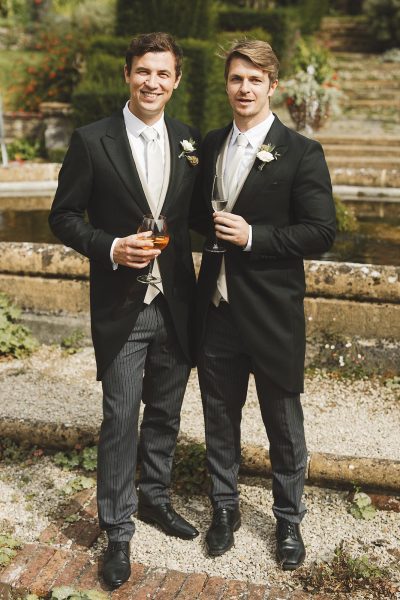
A small selection of photographs from real weddings at Mapperton House & Gardens, showing typical ceremony spaces, garden moments, portraits and evening celebrations across the house and grounds.




FAQs
Can everything take place at Mapperton?
Almost everything of a typical wedding day can be held within the estate, morning prep, ceremony and the evening, without requiring travel between locations.
What time should the ceremony start at Mapperton?
For summer weddings, mid-afternoon often works well at the Garden Pavilion, as the stone façade settles into a warmer, more even tone. Spring and autumn ceremonies offer more flexibility throughout the day.
Because Mapperton’s gardens sit within a valley, light behaves differently across the levels. The exact timing is best considered alongside your overall schedule rather than in isolation.
Is Mapperton suitable for larger weddings?
The Coach House seats up to 120 guests comfortably. Marquee options on the lawn expand capacity further, and the scale of the gardens prevents larger guest numbers from feeling crowded.
Does Mapperton suit documentary wedding photography?
It suits it particularly well. The layout encourages movement and natural gathering rather than staged congregation. There is no single focal terrace or hallway. The day unfolds across levels, which allows moments to develop organically.
Practical information about Mapperton House weddings
Location and Access
Mapperton is located near Beaminster in West Dorset, approximately two miles south-east of the town. Access is via narrow country lanes, part of the venue’s character and sense of seclusion. From experience, the parking and drop-off arrangements work smoothly, even with larger guest numbers.
Accommodation
The Garden Cottage and Keepers Cottage are included for two nights, sleeping up to twelve guests in total. Having accommodation within the grounds supports a calm start to the day and a relaxed end to the evening.
Exclusive Use
Mapperton operates on an exclusive-use basis. Couples typically have access from the afternoon before the wedding for set-up. The gardens close at 10pm, with celebrations in the Coach House continuing until midnight.
Ceremony Options
Licensed ceremony locations include the Garden Pavilion, Grottoes, Orangery, Coach House and All Saints Church. The range allows flexibility in style, scale and weather planning without losing coherence.
If you’re considering Mapperton House & Gardens for your wedding and want photography that works with the venue rather than around it, take a look at my Dorset wedding work or get in touch to check whether your date is free.
>> View Dorset wedding photography
For broader planning advice, including rain plans and timeline guidance, you can view my wedding photography FAQs.
Related Dorset wedding photography:
Explore Wedding Photography
Dorset Wedding Venues
Dorset has no shortage of beautiful wedding venues. These are the ones I return to most:
Smedmore House wedding photographer
St Giles House wedding photographer
Mapperton House wedding photographer
Came House wedding photographer
Lulworth Castle wedding photographer
Minterne House wedding photographer
Larmer Tree wedding photographer
Hinton St Mary Estate wedding photographer
English Oak Vineyard wedding photographer
Parley Manor wedding photographer
Wedding Stories & Inspiration

Paul Underhill Photography | Dorset Wedding Photographer based in Bournemouth | Covering the South Coast & Destination Weddings.