
What 600 Dorset Weddings Have Taught Me
Experience does not make a wedding day predictable. After photographing more than 600 weddings across Dorset, from country estates and clifftop ceremonies to intimate registry offices in Bournemouth and Poole, patterns do emerge. Recurring truths about how days unfold, what shapes the atmosphere, and what couples often wish they had known earlier.
Why Wedding Timelines Rarely Run Exactly as Planned
Nearly every timeline begins with good intentions. On paper it works beautifully. In practice, the day expands.
Hair and makeup can overrun, particularly when the morning feels relaxed and unhurried, which is exactly how it should feel. Travel between locations takes longer than expected, especially across Dorset’s rural lanes. Receiving lines at larger weddings can stretch well beyond their allocated time simply because people want to talk and you want to let them.
Speeches are their own variable. When planned between courses, an overrun creates real pressure on catering teams. Occasionally an unplanned speaker steps up. None of this is wrong. It is simply human. The answer is building genuine breathing space into the structure from the start. Not padding for its own sake, but an honest acknowledgement that the morning will feel different to how it looked in a spreadsheet. A realistic timeline protects the atmosphere. When the day is not being chased, the photographs reflect that.
If you are shaping your schedule, my guide to creating a wedding day timeline explores this in more detail, including where the extra time is most valuable. If you are still working out how much coverage you need, this page on photography hours covers the same question from a different angle.
How Light Shapes Weddings Across Dorset
This is the lesson most couples do not know they need, and the one that makes the most difference to photographs.
Dorset wedding venues are beautiful. But most are inland, set in sheltered valleys, enclosed gardens, or open hillside. The light behaves differently to what couples often expect from open coastal settings. It pools and shifts. It disappears faster than expected. It changes dramatically across the same afternoon depending on cloud, wind direction, and season.
Venues like Mapperton, Larmer Tree, and Abbotsbury sit in sheltered, enclosed settings. On a hot July afternoon they feel very different to how they did during a cool spring venue visit. The air holds still. Guests move into shade. Formal clothing becomes uncomfortable before portraits have started. Knowing this means planning outdoor time earlier in the day, before the heat peaks, rather than waiting for an ideal moment that never quite arrives.
Smedmore House’s open position is part of what makes it so distinctive to photograph. The coastal aspect and the views across the bay are unlike anything inland. It also means wind behaves differently there. Knowing which parts of the estate are sheltered, and when to use them, is exactly the kind of judgement that only comes from being there across different seasons and conditions.
Rural Dorset also brings light conditions that surprise even experienced planners. Cloud builds on the horizon through the afternoon and can settle there at sunset, particularly on humid days. Golden hour does not always materialise. When it does, it often lasts less than ten minutes before the cloud closes back in.
None of this makes Dorset less beautiful to photograph. It makes experience at specific venues genuinely valuable. Knowing when soft light appears earlier than expected. Knowing when shade is the better choice. Knowing when to move portraits forward rather than wait for something that may not come. These are things you can only learn by being there repeatedly.
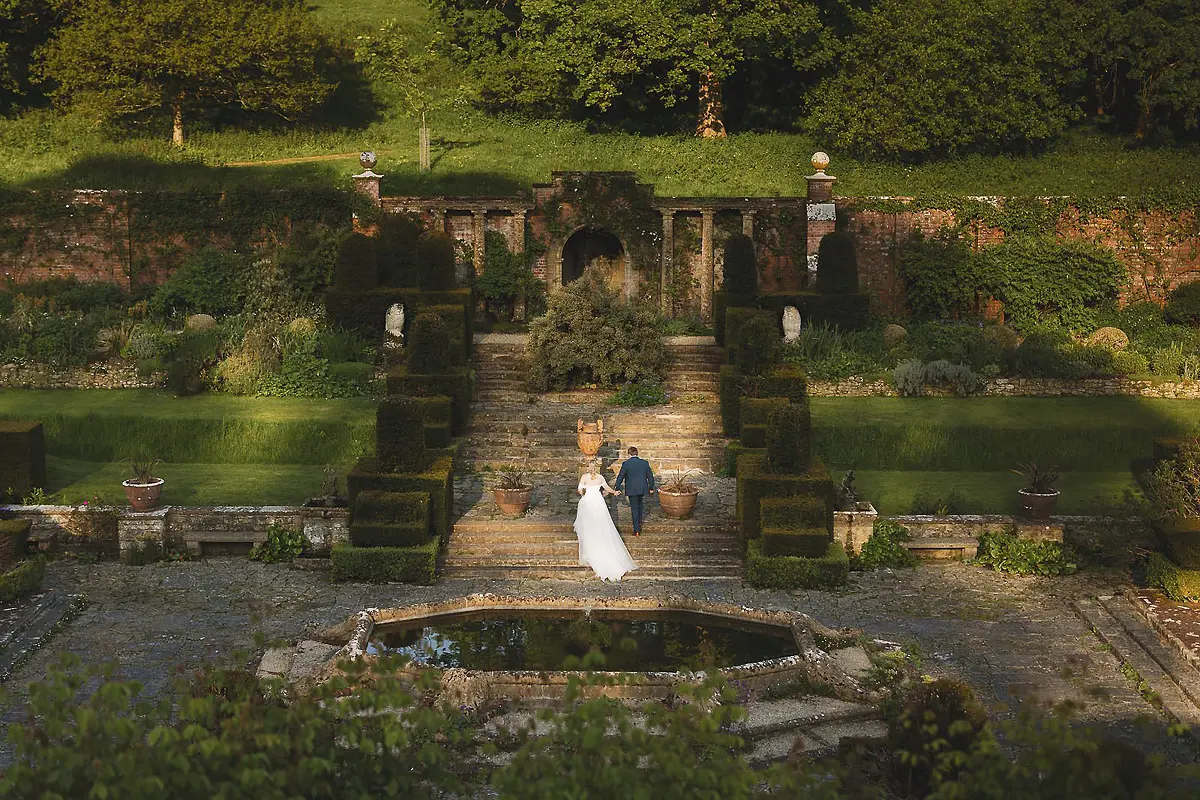
What Dorset Wedding Venues Teach You About How a Day Flows
One of the most useful things repeated experience gives you is not simply knowing where to take photographs. It is understanding how different Dorset venues change the pace and feel of a wedding day.
Some venues are compact and naturally keep people together. Others stretch across gardens, terraces, courtyards and separate buildings, which gives the day visual variety but also changes how guests move, how long transitions take, and where the best moments tend to happen. At one wedding, the energy may stay concentrated in a walled garden or on a single lawn. At another, it may unfold gradually as people drift between spaces and the day opens out more slowly.
Across Dorset, that difference matters more than couples often realise when they first book a venue. A drinks reception in an enclosed garden behaves differently to one spread across a broad terrace or open coastal lawn. A ceremony in a sheltered part of an estate creates a different momentum afterwards to one where guests immediately spill into wider grounds. Even a short walk between the ceremony and reception can either create a useful pause in the day or quietly absorb more time than expected.
This is one of the reasons experience at specific venues matters. It is not only about recognising a backdrop. It is about knowing where the day tends to breathe, where it tends to compress, and where the best photographs often emerge naturally.
The Photographs Couples Treasure Most Are Rarely the Ones They Planned
Couples plan for the ceremony, the confetti, and the first dance. Those moments matter and they are photographed well.
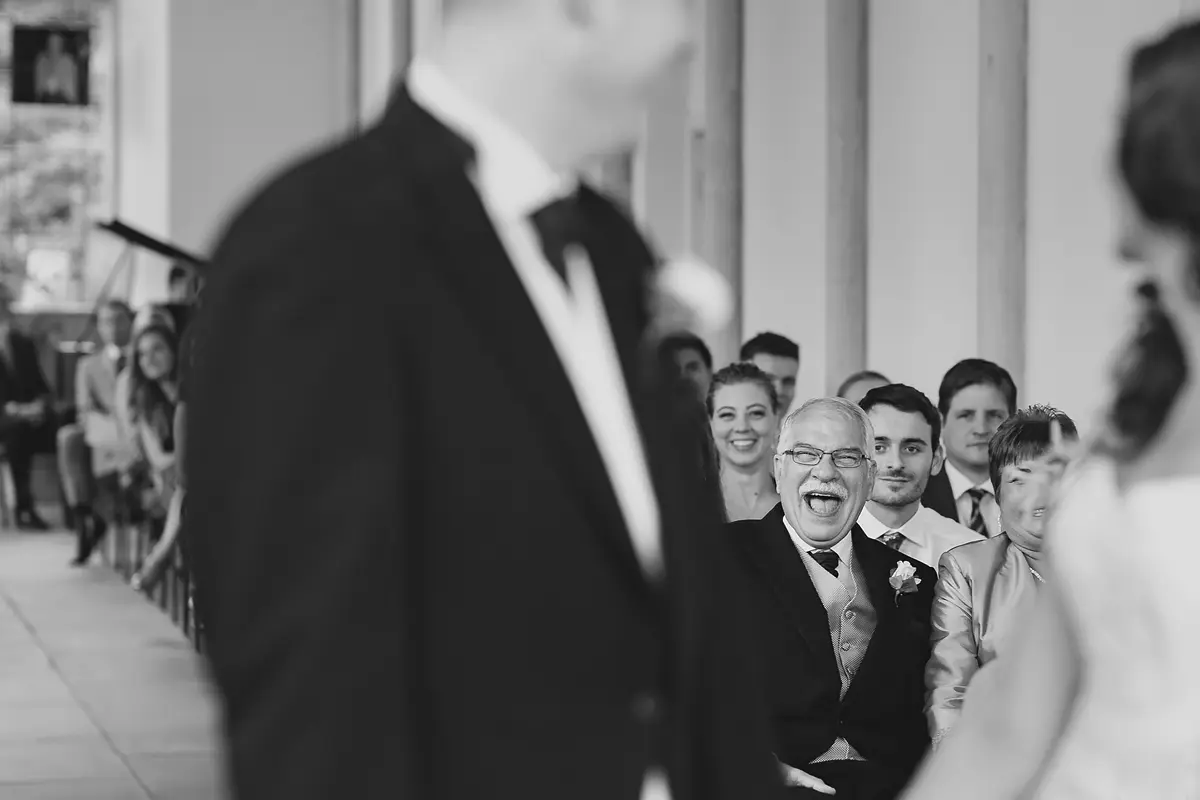
But ask couples a few years later which photographs they return to most, and the answers are usually different. The way a parent watched from across the room during drinks. Two friends who had not seen each other in years, reuniting at the door. The brief pause in a corridor just after the ceremony, when the noise settled and what had just happened finally registered.
These moments are unscripted. They cannot be recreated if missed. They happen in the spaces between the planned parts of the day.
This is why I work in a documentary way throughout, observing rather than directing, staying present rather than retreating between set pieces. Portraits need guidance and group photographs need organising, but the rest of the day is best photographed by being attentive to it rather than shaping it. When guests relax into a place, they stop performing for it.
What Couples Often Underestimate About a Wedding Day
After photographing more than 600 weddings, certain assumptions come up again and again. None of them are obvious when you’re planning.
How different the morning feels to the rest of the day.
This is when the day is most malleable. There is still time to adjust. Once the ceremony begins, the schedule is largely set.
When preparations run late, the atmosphere shifts quickly and people begin to feel rushed. When there is spare time instead, the whole morning settles. There is often a moment for a few relaxed portraits in the garden before leaving for the ceremony. It means everyone leaves on schedule, arrives without stress, and there is usually a little space to photograph the venue and details before guests begin to arrive.
Couples who give themselves space in the morning arrive at the ceremony in a completely different state from those who do not. It shows in the photographs and shapes everything that follows.
How the atmosphere changes immediately after the ceremony.
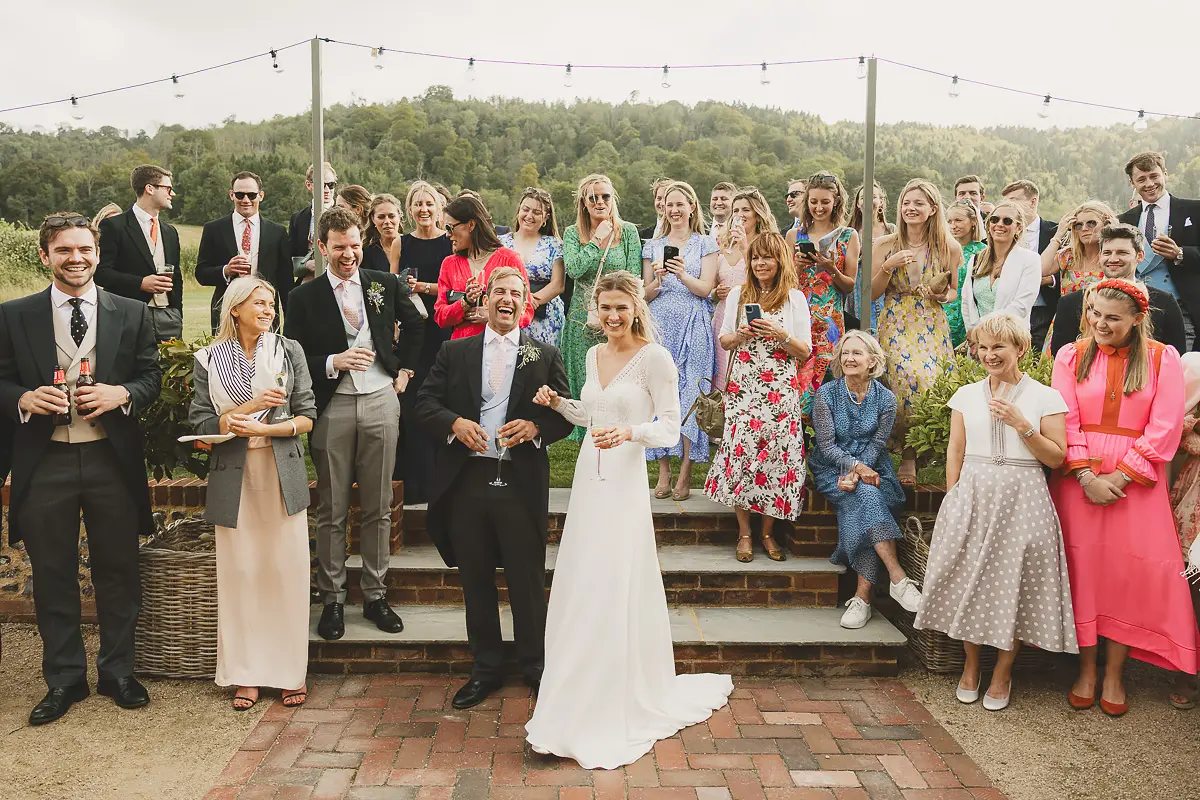
There is often a noticeable shift in energy once the ceremony finishes. The tension of the morning disappears very quickly. Guests relax, conversations begin properly and the couple are suddenly surrounded by people wanting to congratulate them.
Couples who take a little time early in the drinks reception to greet guests often relax noticeably afterwards. Once they have said hello to the people who travelled to celebrate with them, the pressure to catch up later disappears.
That first part of the drinks reception often produces some of the most natural photographs of the day. Everyone is still emotionally connected to what has just happened, but the formality of the ceremony has lifted.
For couples it can also feel slightly overwhelming, particularly at larger weddings. Stepping away briefly for a short walk together often helps the day settle into a more relaxed rhythm.
How quickly the drinks reception passes, and how often it is too short.
This is usually the most social part of the day. The formality of the ceremony has just lifted, everyone is in the same place, and the energy is high. An hour can feel like twenty minutes. For a wedding of around 100 guests, 90 minutes is a realistic minimum. Two hours is better. You need time to move through the room, talk to people who have travelled to be there, manage group photographs, step away briefly for portraits, and actually spend a few minutes together. Most couples plan shorter drinks receptions than they need, and it is the part of the day they most often wish they had extended.
How the timing of speeches affects the atmosphere.
From a photographer’s perspective, speeches before food often create a noticeably more relaxed atmosphere afterwards. The people giving speeches are usually the only ones feeling genuine nerves, so once they have finished the room tends to settle quickly.
For guests the experience is slightly different. By the time dinner begins they may already have been standing for two hours or more, once the ceremony, travel between locations and drinks reception are taken into account. At that point most people are ready to sit down, eat and relax.
When speeches take place before the meal they also allow more flexibility with where they happen. At some weddings they are held outside during the drinks reception, particularly at venues with views or large gardens. That can create a very different atmosphere compared with speeches taking place between courses inside.
If speeches are scheduled before dinner, generous canapés during the drinks reception become more important. Some couples plan larger snacks for exactly this reason.
That there is a natural gap worth protecting in the early evening.
The period between dinner and dancing is one of the most valuable parts of the day. Guests are settled and happy. The light outside is softening. It is the natural moment for cocktails on the lawn, a walk around the grounds, or simply space to breathe. For summer weddings this is when outdoor spaces feel their best. It is also when the strongest evening portraits happen, because the light is softer and nobody needs to be anywhere urgently.
How much venue logistics affect the atmosphere.
When everything happens in one place, or within a short distance, the day settles into its own rhythm. When there are longer transfers between locations, the pace fragments. Traffic across Dorset on a summer Saturday is not a minor detail. Guests travelling from Bournemouth or Poole to West Dorset venues regularly encounter delays. Routes towards Studland, Swanage, or the Isle of Purbeck can be affected by ferry queues and seasonal congestion. Journeys that appear straightforward on a weekday can take considerably longer on a summer weekend. If your day involves travel across the county, allow realistic time for it.
That rain is likely at some point, and a plan matters more than hoping it will not happen.
Rain often produces some of the most atmospheric light of the day. But being unprepared causes far more disruption than the weather itself. A few clear umbrellas arranged in advance, and knowing your venue’s covered options, means rain becomes a brief adaptation rather than a crisis.
How much the venue affects the mood, not just the backdrop.
Private, exclusive-use estates change the atmosphere of a day in ways that are immediately visible in photographs. When guests are in an enclosed, private space with no passing public and no shared events, they settle. Conversations become less performative. The day develops its own pace, and that ease shows in the images.
600 WEDDINGS IN DORSET
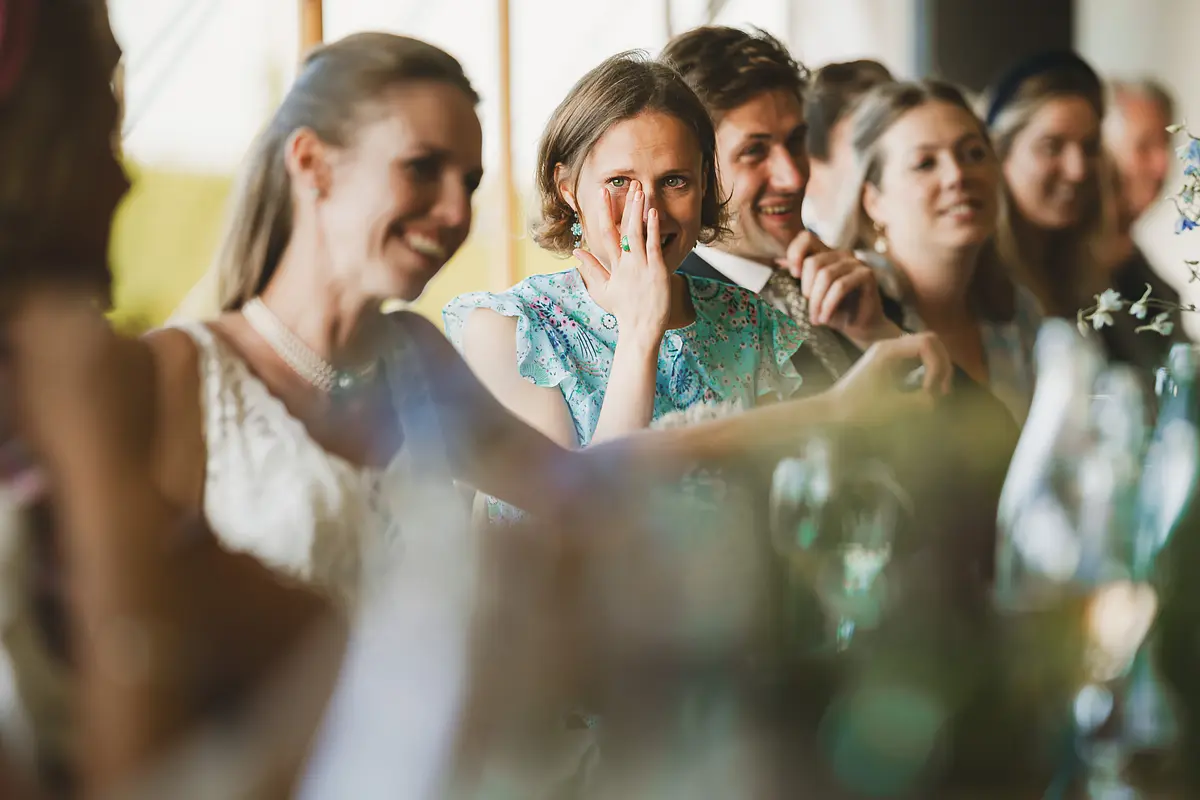
“600 weddings doesn’t make any single one predictable. But it does mean that when something shifts – the light, the timing, the mood – the response is instinctive rather than improvised.”
What Experience at Dorset Venues Really Means
There is a clear difference between a photographer who has worked at a venue once and one who has returned to it across many seasons.
Experience builds a quiet understanding of how each venue behaves. Which gardens hold cooler air on hot afternoons. Which interior spaces photograph beautifully in winter. When outdoor options become limited and where the alternatives are. When conditions change, the next decision is faster and more confident because it has been made before.
Wet ground changes more than most couples anticipate. A heavy shower the evening before can leave lawns soft and paths slippery even on an otherwise dry day. Protecting a dress hem, finding routes that keep shoes clean, and identifying which areas of the grounds still work when the obvious ones do not are decisions that need to be made quickly and calmly.
I’ve hit my head on a barn beam more than once moving quickly between rooms. You learn the venue’s architecture faster after that.
Some venues reveal themselves most fully in a particular season. Came House on a dull winter day photographs beautifully because of its conservatory, a space that becomes the heart of the day in December in a way it simply wouldn’t in summer. Knowing which spaces work when, and why, is the kind of thing that only comes from being there repeatedly across different conditions.
This kind of familiarity does not make a wedding more controlled. It simply makes the response to what happens more considered.
How People Shape the Atmosphere of a Wedding Day
After photographing hundreds of weddings, one thing becomes clear: the atmosphere of the day is shaped far more by people than by plans.
When couples are relaxed, the room tends to follow. When the morning feels calm and unhurried, that energy carries through the ceremony, the drinks reception, and often the entire evening.
The opposite can happen too. Occasionally one side of the family becomes very focused on details and timing, which can create unnecessary pressure early in the day. One simple way to avoid that is delegation. When friends or extended family help manage practical tasks such as timing, bouquets or small logistics, immediate family members are free to simply be present.
Guest dynamics also change the feel of a wedding more than couples often expect. Smaller weddings frequently feel emotionally intense because everyone knows each other and conversations run deeper. Larger weddings can be wonderful in a different way, but they sometimes create moments where the couple feels pulled in many directions at once.
Short moments away together help too. A ten minute walk for portraits around the venue often becomes a natural pause in the day. Couples regularly say those few minutes are the first chance they have had to breathe and talk together since the ceremony.
The couples who enjoy their wedding most are rarely the ones with the most detailed plan. They are usually the ones who accept that small things will occasionally go wrong. A flower arrangement may fall over, a wine may run out, or something may run slightly late. None of it changes the experience of the day.
When people allow those moments to pass without stress, the atmosphere remains relaxed. And when the atmosphere is relaxed, the photographs follow.
The Unexpected Moments That Shape a Wedding Day
No matter how carefully a wedding is planned, something unexpected almost always happens.
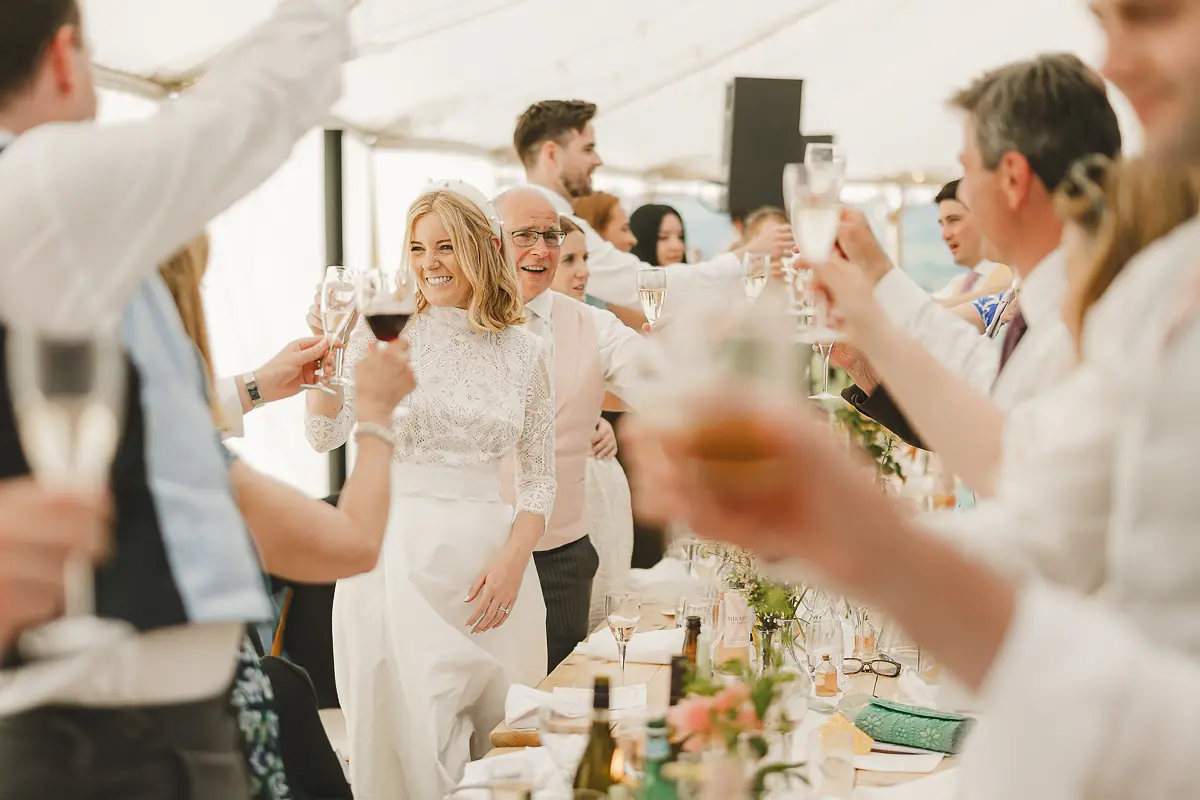
A sudden gust of wind lifts a veil as the couple walk out of the church. Friends begin chanting and lift the groom into the air during the drinks reception. Someone starts an impromptu song or game that spreads through the room.
These are the moments that make weddings memorable, and they cannot be scheduled.
Small changes to the timeline are just as common. A ceremony may run ten minutes late. Guests take longer than expected to move between locations. Speeches stretch slightly beyond their planned time.
After hundreds of weddings, those shifts simply become part of the day. Adjusting to them is second nature.
Experience also means being aware of the wider flow of the event. Throughout the day I stay in quiet communication with planners, venue managers and catering teams so everyone remains aligned as timings move. At smaller or more informal weddings there may be no formal planner at all, and occasionally a friend or family member is helping coordinate the schedule.
In those situations, gentle awareness and organisation behind the scenes can help the day stay relaxed without drawing attention to it.
The aim is never to control the day, but to understand its rhythm. When you recognise how weddings tend to unfold, responding to small changes becomes instinctive.
What Experience Actually Changes on a Wedding Day
Experience does not mean treating weddings as formulaic. If anything, it does the opposite. It makes it easier to respond to what is actually in front of you rather than relying on habit.
Noticing when the light is softening earlier than expected allows time for editorial wedding portraits before the moment passes. Experience also helps in recognising when a couple needs ten quiet minutes away from everyone, and when they are better left in the middle of the drinks reception because that is where the atmosphere is strongest. It also helps you read the point at which a schedule is beginning to tighten, and make small decisions early so the pressure never becomes visible.
That affects the way the whole day is photographed. Couples do not need a running commentary on every shift in timing or weather. They need someone who sees those changes, responds quietly, and keeps the experience feeling relaxed. That is often the real difference experience makes. Not more control, but less friction. Not more direction, but better judgement about when to step in and when to leave things alone.
After hundreds of weddings across Dorset, that judgement becomes part of how I work. It allows the day to remain true to itself while still being photographed with care, awareness and consistency from start to finish.
What You’re Really Booking
These are the things I think about before I arrive, and the details that often make the biggest difference to how a day unfolds. 600 weddings doesn’t make any single one predictable. But it does mean that when something shifts, the response is instinctive rather than improvised. That’s what you’re really booking.
If you are planning a Dorset wedding and want a documentary-led approach, you can explore more about how I work as a Dorset wedding photographer.
More Wedding Photography Guides
Practical guides for couples planning their wedding photography in Dorset.
- How to Plan Your Wedding Photography
- Wedding Day Timeline Guide
- What Happens If It Rains on Your Wedding Day?
- How Many Hours of Wedding Photography Do You Need?
- How Much Does Wedding Photography Cost in Dorset?
- Wedding Photography Style Guide
- Wedding Group Photos That Feel Natural
- How to Look Natural in Wedding Photos
- The Best Time of Year to Get Married in Dorset
- What 600 Dorset Weddings Have Taught Me
- Wedding Photography FAQs

Bournemouth · Dorset · Hampshire · London
- Wedding Photographer Dorset
- Documentary Wedding Photography
- Editorial Wedding Photography
- Planning Your Wedding Photography
- Dorset Wedding Venues Guide
- Wedding Photography Pricing
- Wedding Photography FAQs
- Happy Couples & Reviews
- Intimate Weddings & Elopements
- Registry Office Weddings
- LGBTQ+ Weddings
- Check My Availability
- Smedmore House wedding photographer
- St Giles House wedding photographer
- Mapperton House wedding photographer
- Came House wedding photographer
- Studland Bay House wedding photographer
- Lulworth Castle wedding photographer
- Minterne House wedding photographer
- Larmer Tree wedding photographer
- Hinton St Mary Estate wedding photographer
- English Oak Vineyard wedding photographer
- Parley Manor wedding photographer
- Poole Guildhall wedding photographer